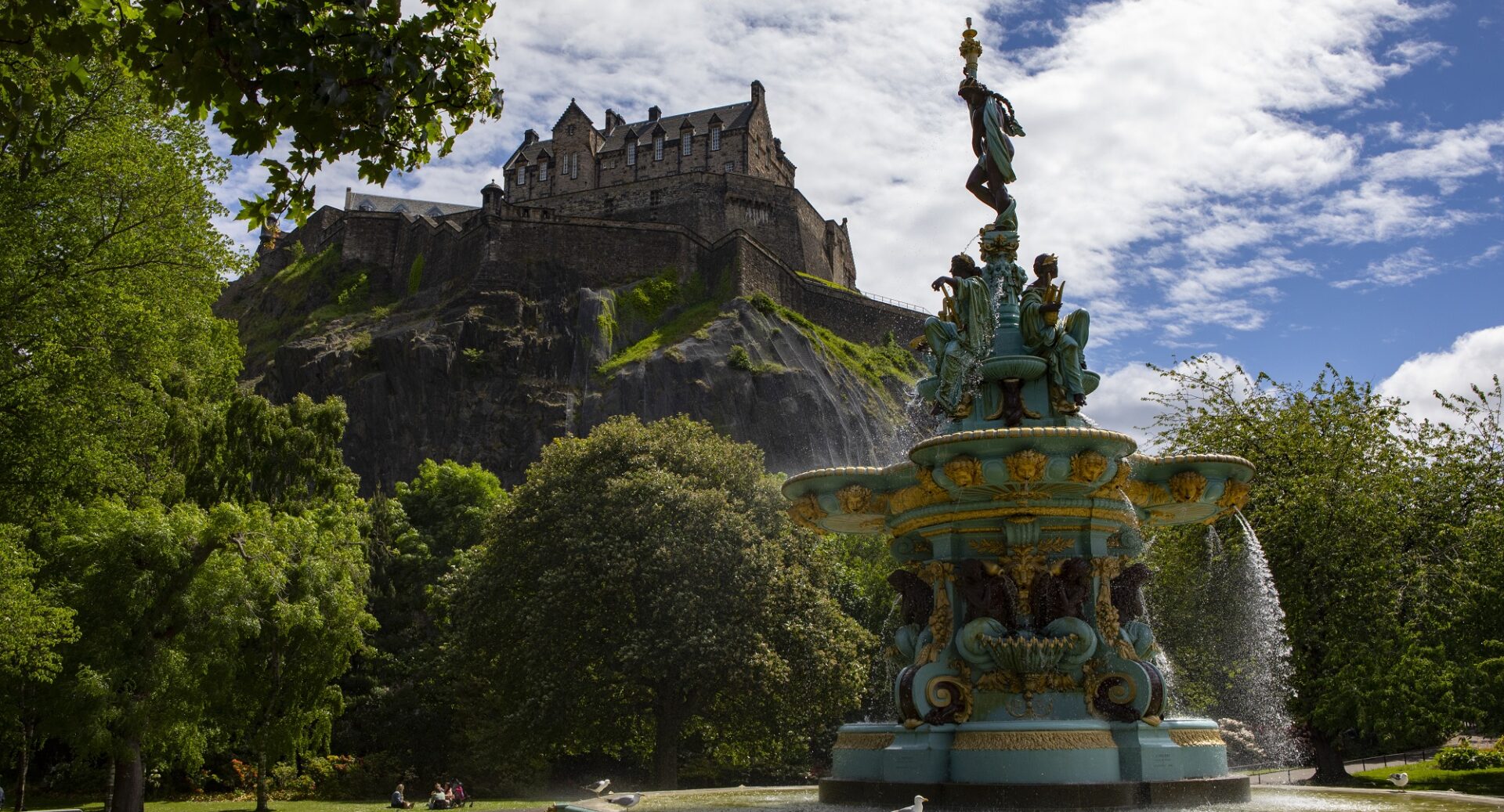
Perched high above the city on an ancient volcanic rock, Edinburgh Castle dominates the skyline of Scotland’s capital city.
Beyond the entrance lies far more than a single historic building. The castle is a layered stronghold filled with royal treasures, military history, dramatic battlements and stories of sieges, Kings, Queens and prisoners. Whether you’re interested in Scotland’s monarchy, architecture, warfare or social history, a visit here feels immersive from the moment you arrive.
For many visitors, the castle becomes the centrepiece of an Edinburgh itinerary, as it perfectly combines iconic landmarks with panoramic city views and easy access to the surrounding UNESCO designated Old and New Towns.
Edinburgh Castle: your complete visitor’s guide aims to help you plan the perfect visit to Edinburgh Castle, whether for a few hours or building it into a longer stay in the city. From choosing the best time to go and understanding ticket options to discovering the castle’s must-sees, nearby attractions and seasonal highlights, our guide brings together everything you need to know before you arrive. You’ll also find practical advice on transport, accessibility, viewpoints and places to eat – all helping you make the most of your time at one of Scotland’s iconic landmarks.
Planning your visit
Opening hours
The castle is generally open all year round, though opening and closing times vary by season. Summer months usually offer longer visiting hours, while winter open hours can be shorter. The castle closes on 25 and 26 December.
On occasion, certain events or severe weather can cause the castle to close. It’s worth checking online for current notifications.
The museums within the castle – such as the National War Museum and Royal Scots/Royal Regiment of Scotland Museum – may have slightly different opening hours.
Tickets
Booking your tickets online in advance is recommended for both the best price and to guarantee entry. Ticket options include Standard Admission (with a selected date and time slot), a Flexi Ticket (valid for one entry at any timeslot on any day within a 7 day period starting from your selected visit date), or Guided Tour and Admission Ticket, which includes admissions to the castle and a 30 minute guided tour in English. See Edinburgh Castle for ticket types.
Once tickets are sold out online, it is not possible to buy tickets in-person at the castle.
If you’re also planning on visiting Stirling and Urquhart Castles, the Explorer Pass includes entry to these sites within 14 consecutive days. T&Cs apply.
Best time to visit
Early mornings tend to provide the quietest atmosphere and clearest photo opportunities. Late afternoon visits can also be rewarding, especially when the sunset casts a golden glow over the city rooftops. The busiest time of the year is August, when Edinburgh’s summer festivals attract large numbers of visitors to the city.
How much time do you need?
It can take between 2 and 4 hours to properly explore the whole castle. You should allow at least 2 hours to experience the major highlights without rushing.
What to see – the highlights
The Great Hall:
One of the castle’s most striking interior spaces. Built in the early 1500’s for royal ceremonies and banquets, it features an impressive hammerbeam roof and an extensive collection of historic weapons along the walls. Keep a look out for the Laird’s lug, or peephole, which were used by the King to eavesdrop on conversations!
The Honours of Scotland:
The crown jewels of Scotland, known as The Honours of Scotland, are among the castle’s greatest treasures. The Crown, Sceptre and Sword form the oldest crown jewels in Britain, and are on display in a specially fortified room.
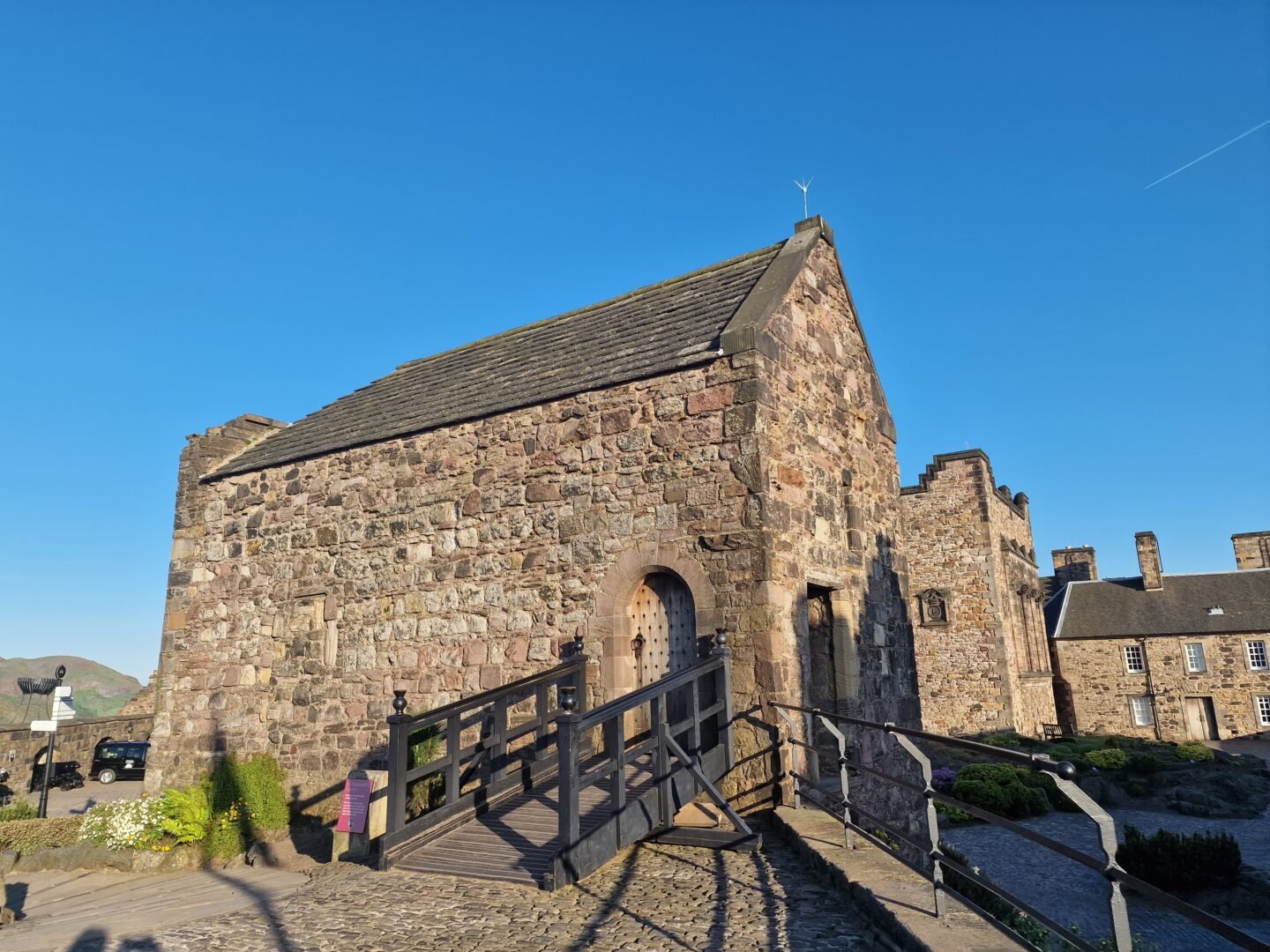
St Margaret’s Chapel:
Tiny, yet significant, St Margaret’s Chapel dates back to the 12th century and is the oldest surviving building in Edinburgh. Its peaceful stone interior offers a quiet contrast to the busy area outside.
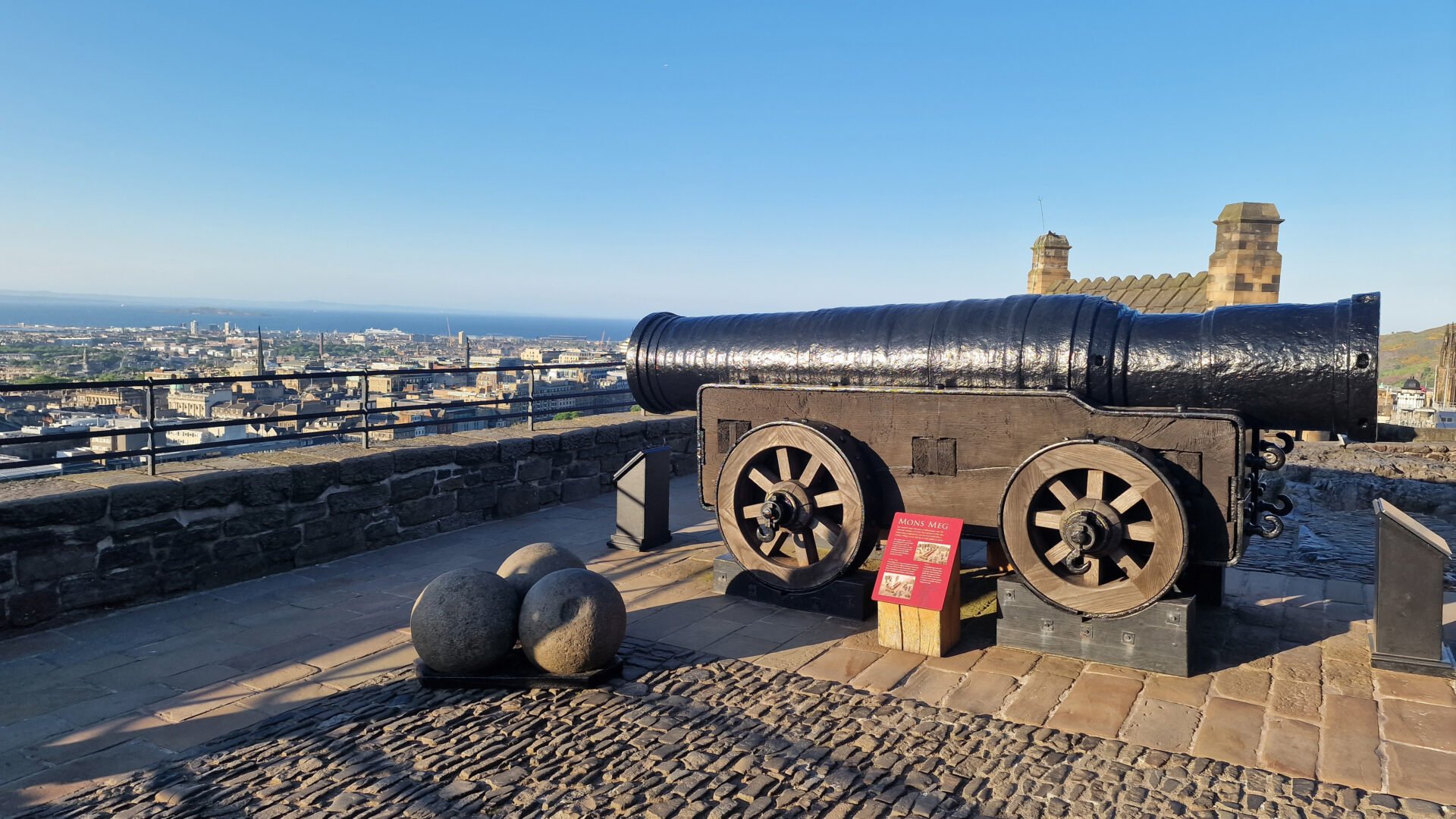
Mons Meg:
Given to King James II in 1457, Mons Meg is a gigantic medieval siege cannon capable of firing enormous stone balls. Positioned on the castle walls, it remains one of the most photographed military artefacts on display.
The One O’Clock Gun:
One of Edinburgh’s most famous traditions takes place daily (except for Sundays, Christmas Day and Good Friday) when the One O’Clock Gun fires from the battlements. Originally used as a time signal for ships in the Firth of Forth, it still draws crowds each afternoon.
The National War Museum:
Located within the castle complex, the National War Museum explores Scotland’s military past through uniforms, medals, weapons and personal stories from centuries of conflict.
Prisons of War:
The underground prison vaults reveal a darker side of castle life. Held here were captured sailors and soldiers from conflicts involving France, Spain, the Netherlands, and the American War of Independence. Graffiti left behind by some prisoners can still be seen in some of the cells.
The Royal Palace:
Located in Crown Square, The Royal Palace was once the heart of the royal castle, and was a place of comfort and splendour, as well as security. It was here in 1566 that Mary Queen of Scots, gave birth to James VI – he would go on to become the first monarch of both Scotland and England in 1603.
Self-guided vs guided tours – which is right for you?
A self-guided tour
Offers flexibility and freedom to explore at your own pace. This option works well for independent travellers and those who enjoy exploring without time pressure.
Guided tours
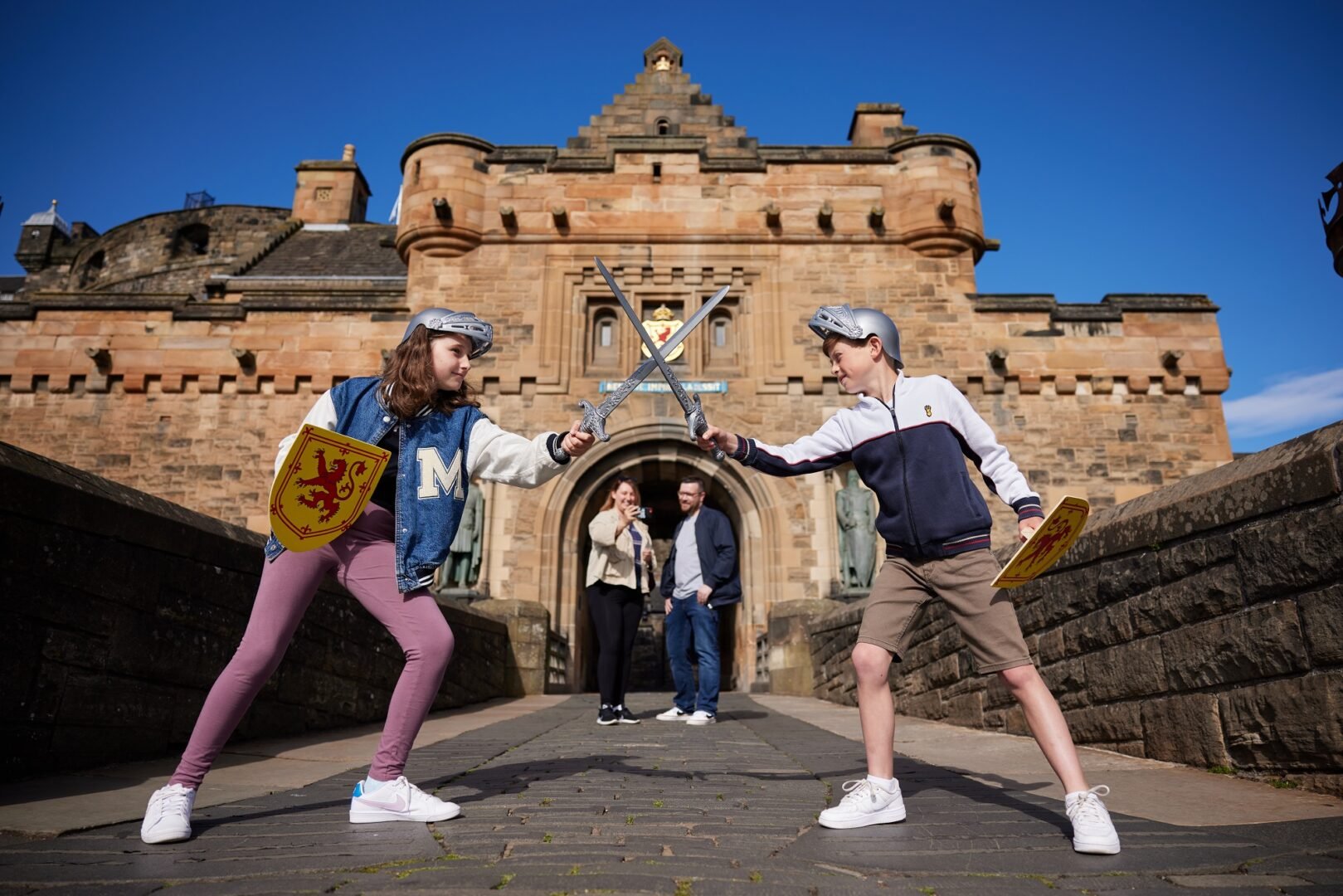
Bring the castle’s stories vividly to life. Knowledgably guides explain the political intrigue, battles and royal drama that took place behind the castle’s walls. These tours are particularly useful for first-time visitors. Guided tours incur an additional charge and must be pre-booked in advance of arrival.
Audio guides
Available in English, French, German, Italian, Japanese, Mandarin, Korean, Polish, Portuguese (Brazilian), Russian, Spanish and Ukrainian, as well as large print, provide a useful tool in learning more about the castle history. These can be hired from the ticket office and audio booth, or pre-booked online when you buy your tickets.
The best viewpoints of Edinburgh Castle from outside
The Vennel
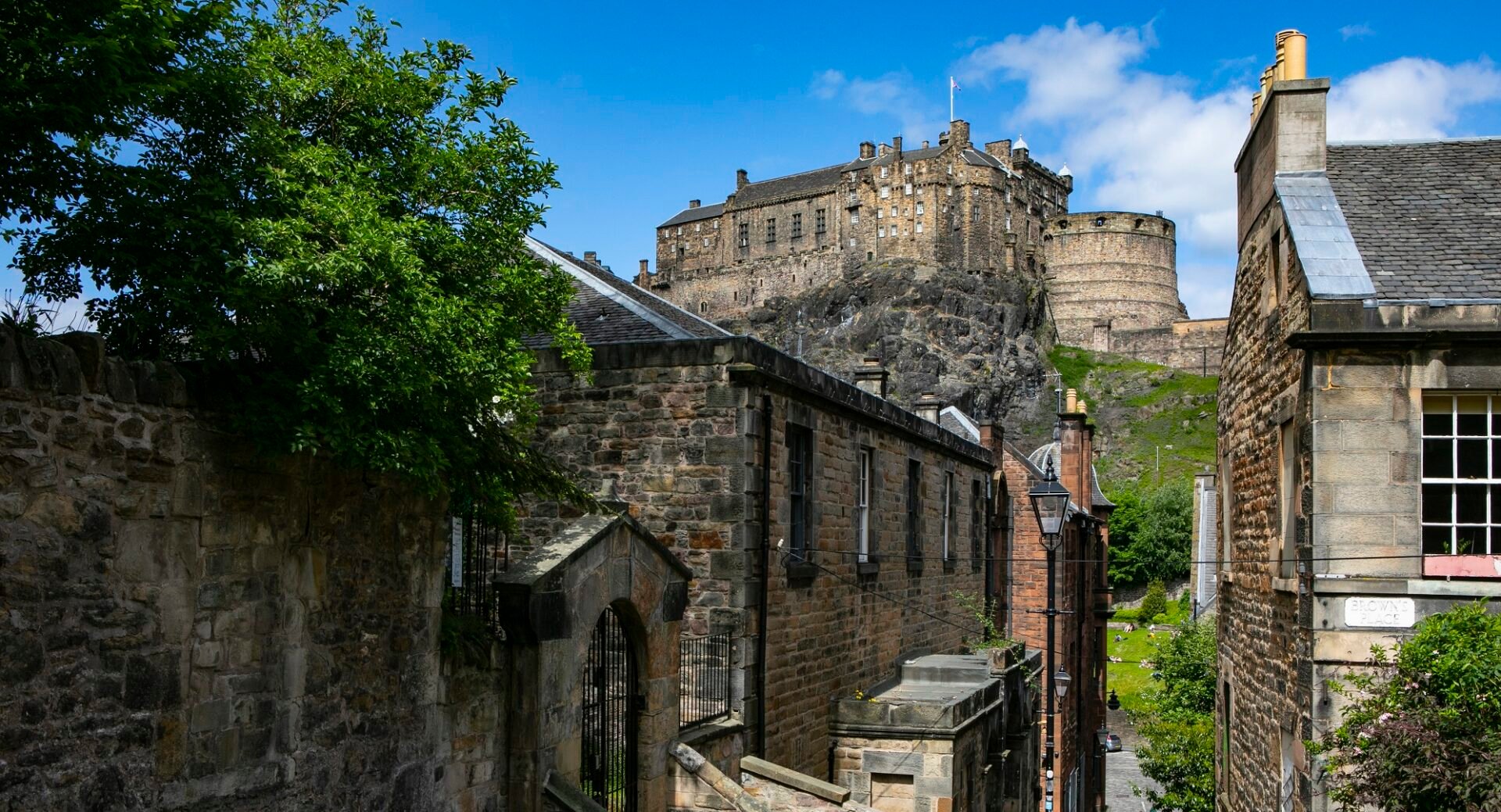
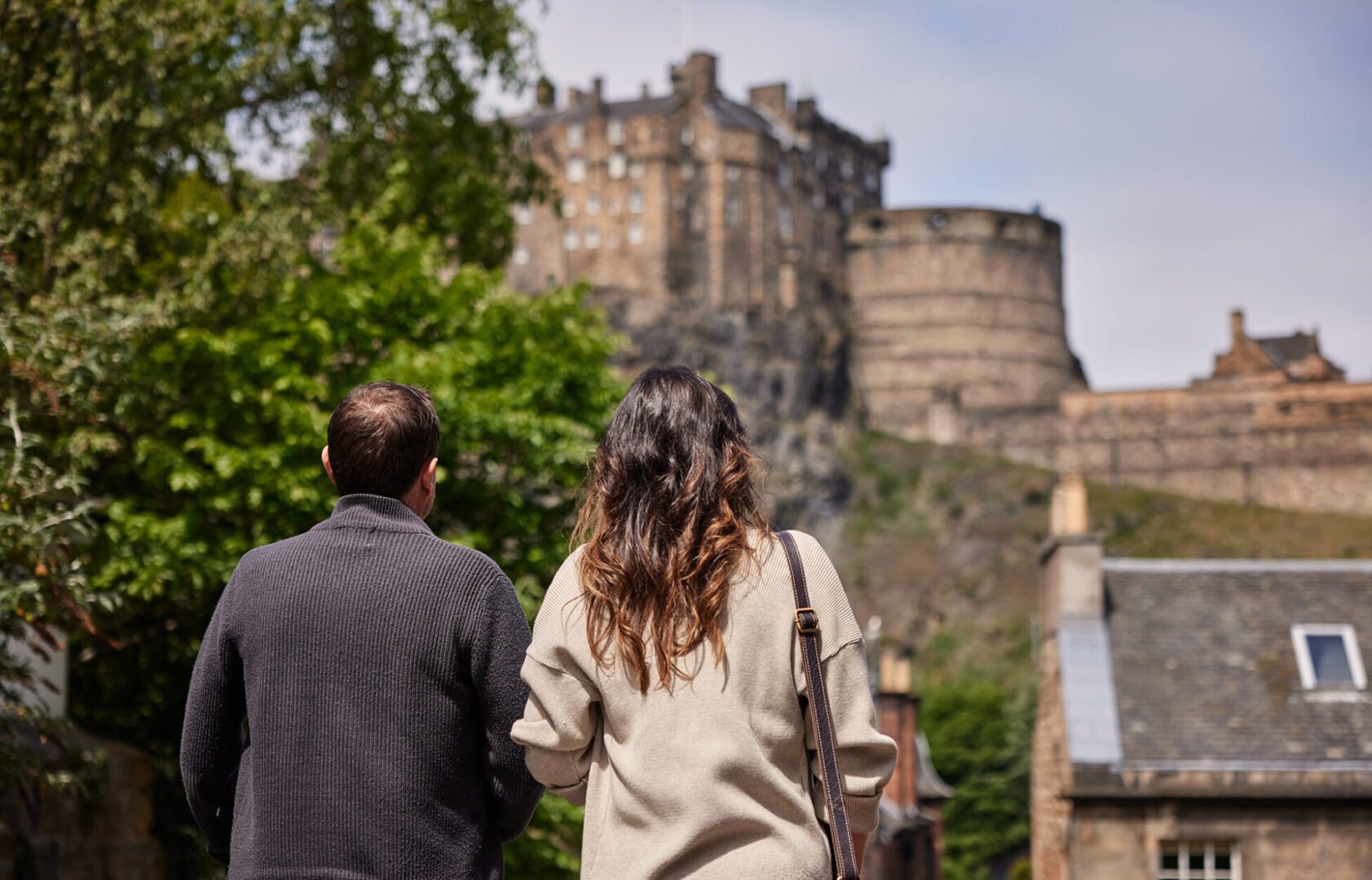
Offers one of the city’s classic castle views. Stone steps frame the fortress dramatically, making it a favourite photo spot, especially at sunset.
From Princes Street Gardens
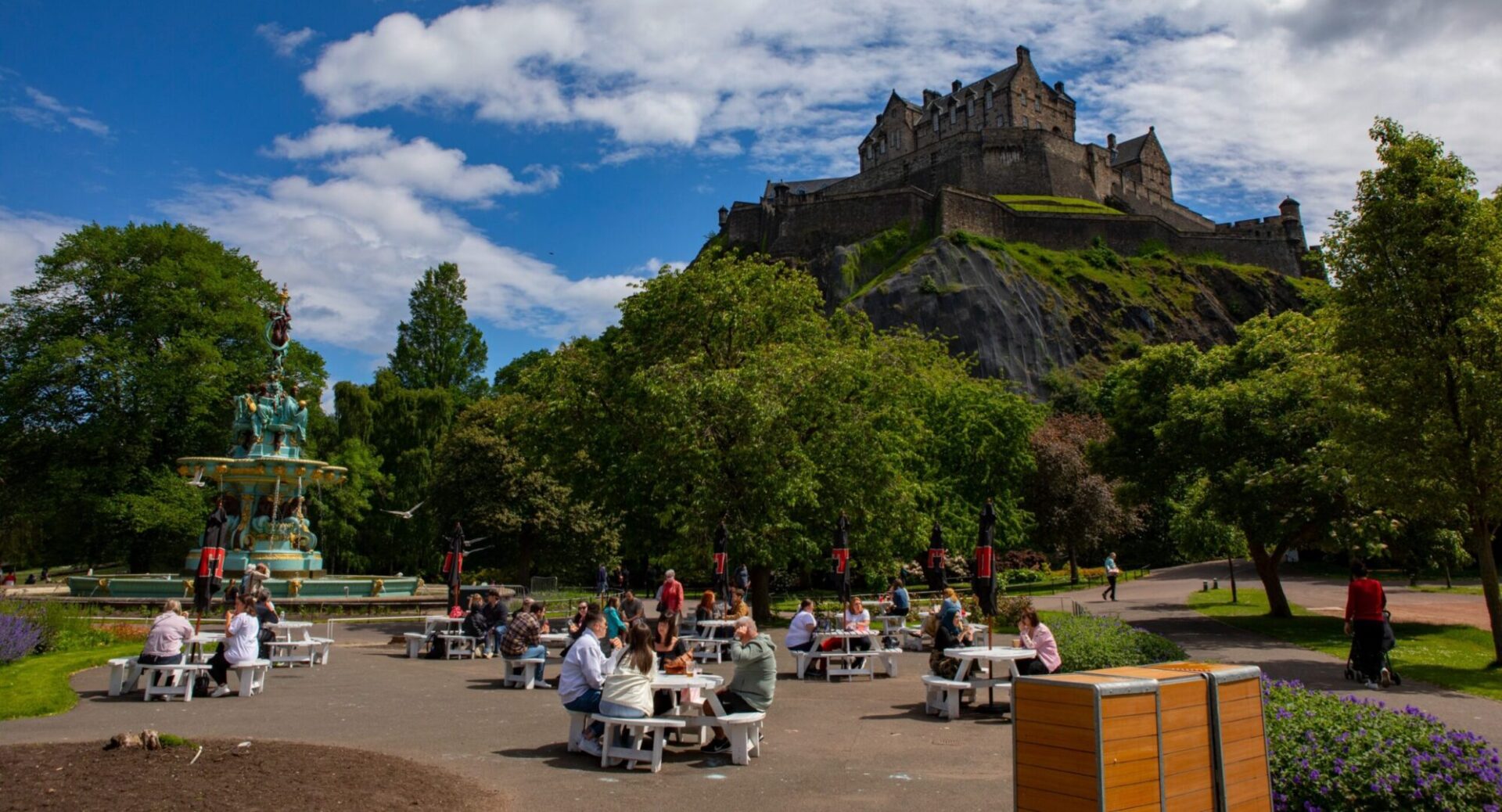
The castle appears towering above the city, creating one of Edinburgh’s most recognisable scenes.
Calton Hill

Provides wider panoramic perspectives across the capital, with the castle standing prominently against the skyline.
Where to eat
Inside the grounds
The family-friendly Recoat Café is popular for light lunches, coffee and refreshments, with impressive city views. For a more traditional setting, The Tea Rooms in Crown Square serves snacks, meals and afternoon tea in a historic setting.
Just beyond the castle entrance
The surrounding Royal Mile offers everything from whisky bars to modern Scottish dining. The nearby Grassmarket area is especially lively, with pubs and bars, or head to Victoria Street with its range of casual eateries and upscale dining spaces.
Getting to Edinburgh Castle
- Walking from the Royal Mile: most visitors reach the castle by walking uphill to the top of the Royal Mile, which is bookended with the Palace of Holyroodhouse at the bottom. The route passes historic closes, shops, street performers and centuries-old buildings. Edinburgh’s compact centre also makes the attraction easy to reach on foot from Waverley Train Station and Princes Street – but it is uphill.
- Public transport: several of Lothian Buses services stop on the Mound or George IV Bridge – from here it is a short walk to the castle entrance.
- A number of hop-on, hop-off bus tours, such as Edinburgh Bus Tours and Big Bus Edinburgh stop close of the castle.
- Cycling: from November to April, bicycles can be left in the bike racks on the left hand side of the esplanade (behind the ticket box). These are not available from May to October when the esplanade hosts the Royal Edinburgh Military Tattoo and its accompanying stadium construction.
- Parking – there is no public parking at the castle itself. Nearby city-centre parking facilities can fill quickly, especially during festivals and weekends, so public transport is often the easiest option.
- There are a small number of parking spaces available on the castle esplanade for ticket holders with accessibility requirements. These are available upon arrival and may also be booked in advance by emailing ecparking@hes.scot. (Availability is limited from May to October).
- Accessibility: because the castle sits atop volcanic rock, some paths are uneven and cobbled however, accessible routes and assistance options are available for many areas.
- A mobility vehicle (accommodating three passengers plus one passenger that uses a wheelchair) to Crown Square is available on request, and can be arranged at the castle entrance.
- A small number of manual wheelchairs are available for use on a first-come, first-served basis.
- Sensory backpacks, containing ear plugs, tactile toys, sunglasses, binoculars, a wind-up torch, a sand timer and a sensory map, are available to borrow from the ticket office. Ear defenders are also available. For full details on accessibility within the castle see the Edinburgh Castle access guide.
Edinburgh Castle through the seasons
Spring
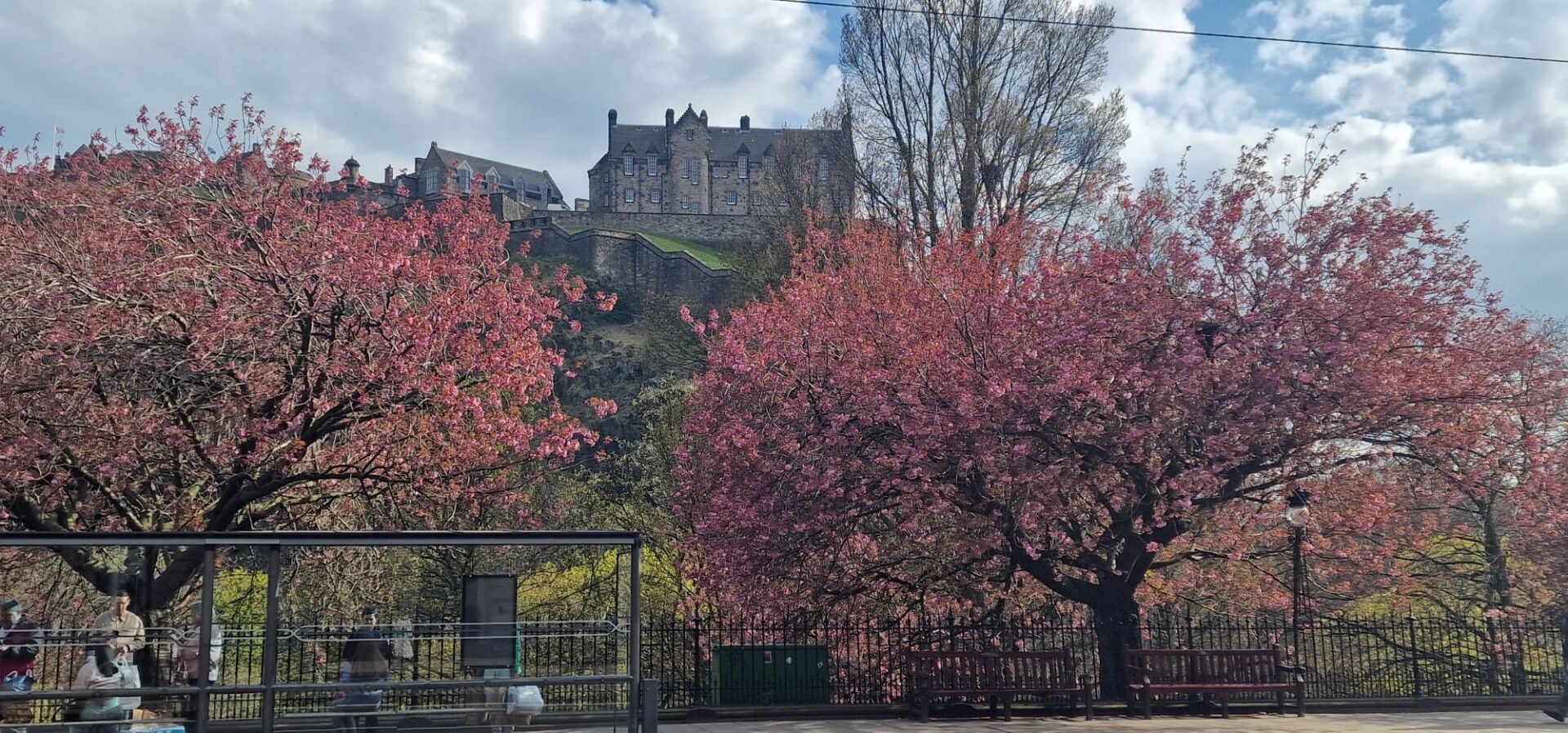
After shaking off its winter chill, Edinburgh’s parks and gardens burst into life in springtime. Capture picture-perfect views of the castle framed by bright cherry blossom from Princes Street Gardens.
Summer
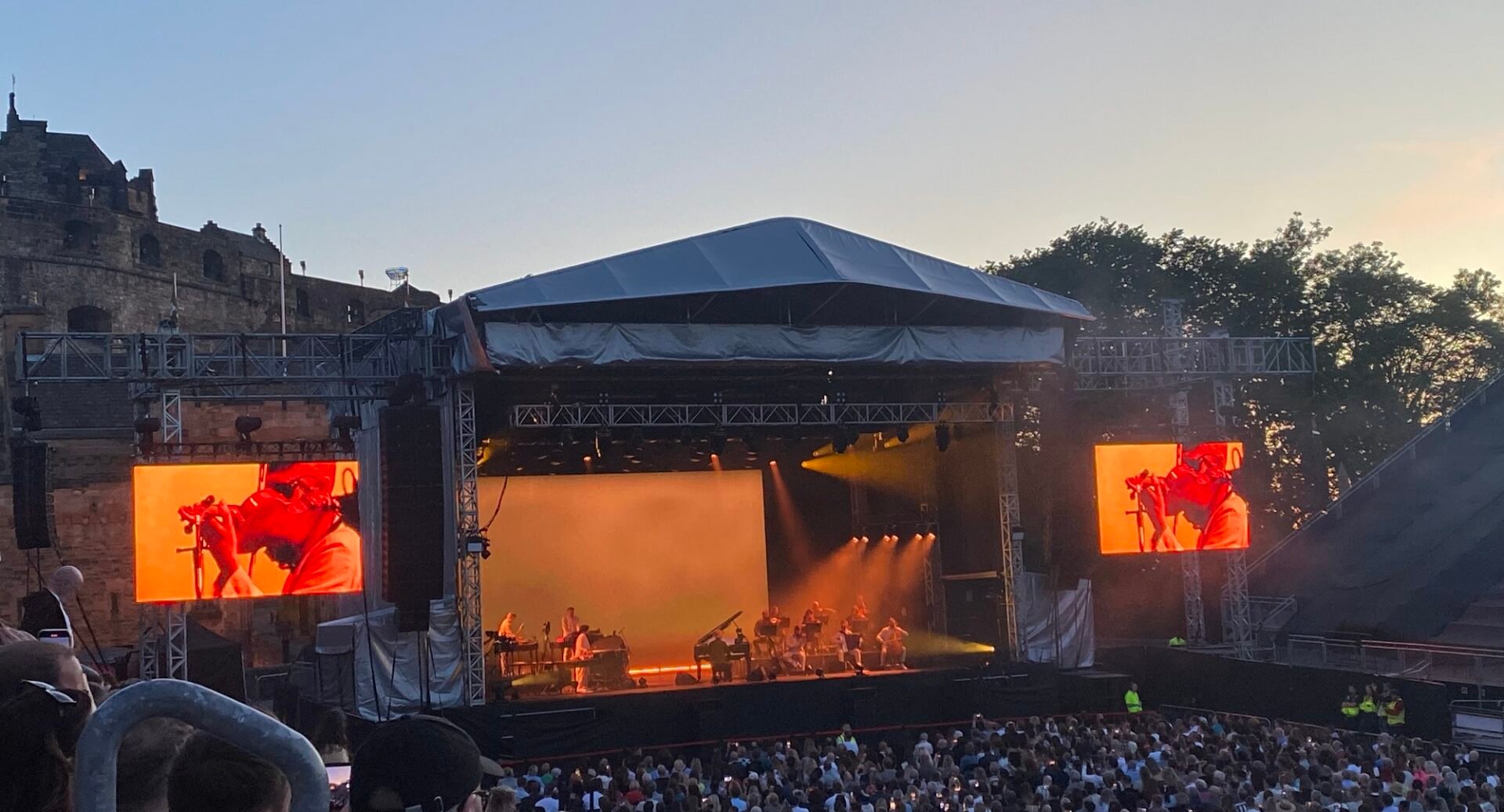
Summer transforms the castle’s esplanade into one of Scotland’s most vibrant event venues. The open-air Castle Concerts attract major artists, while The Royal Edinburgh Military Tattoo is a world-famous celebration combining military bands, pipers, dancers and dramatic performances against the illuminated fortress backdrop.
Autumn
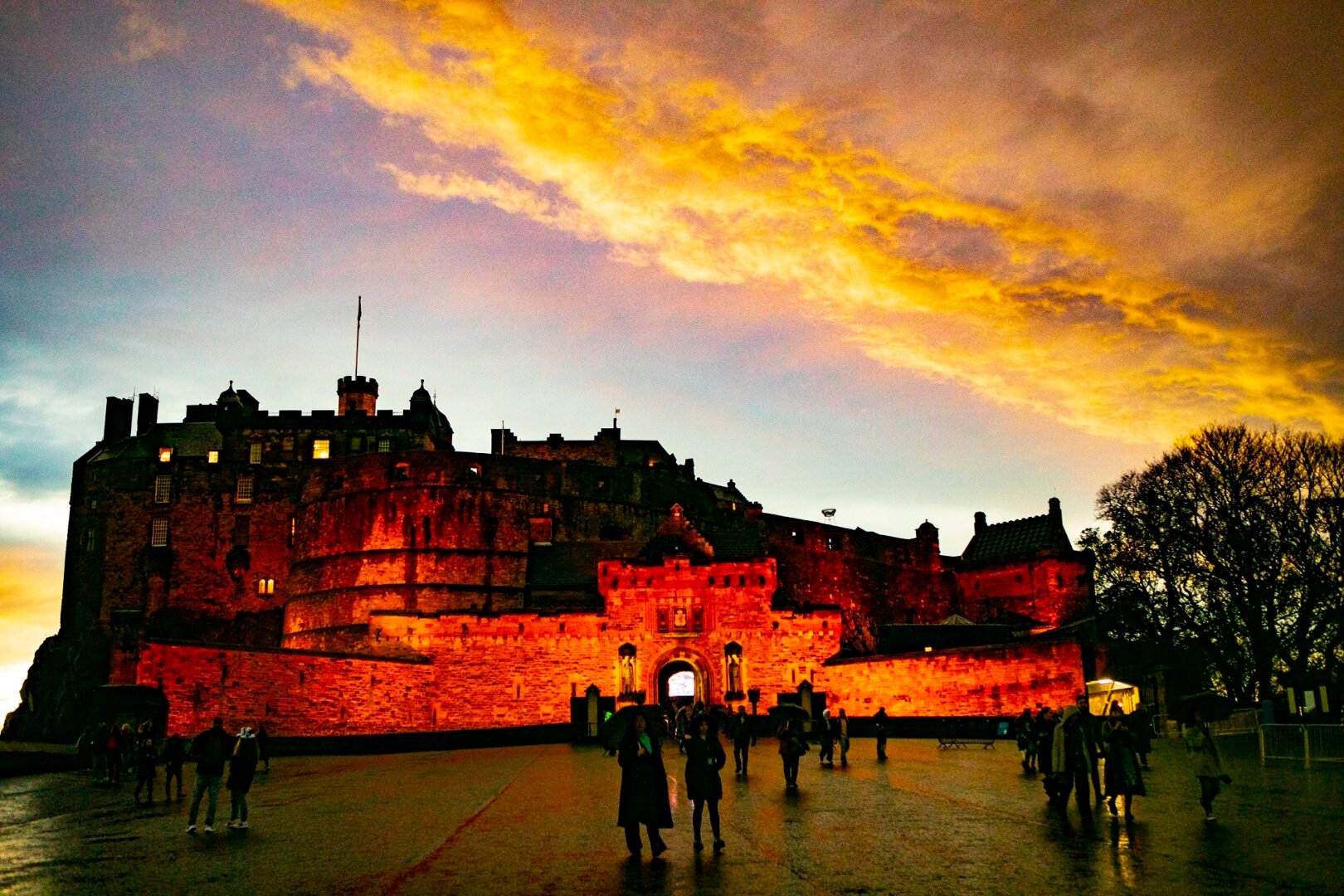
Autumn brings a golden glow to the castle stonework during the day, while atmospheric sunsets bathe the fortress in pink and orange hues. Keep an eye on their social channels for October activities that capture spooky season.
Winter
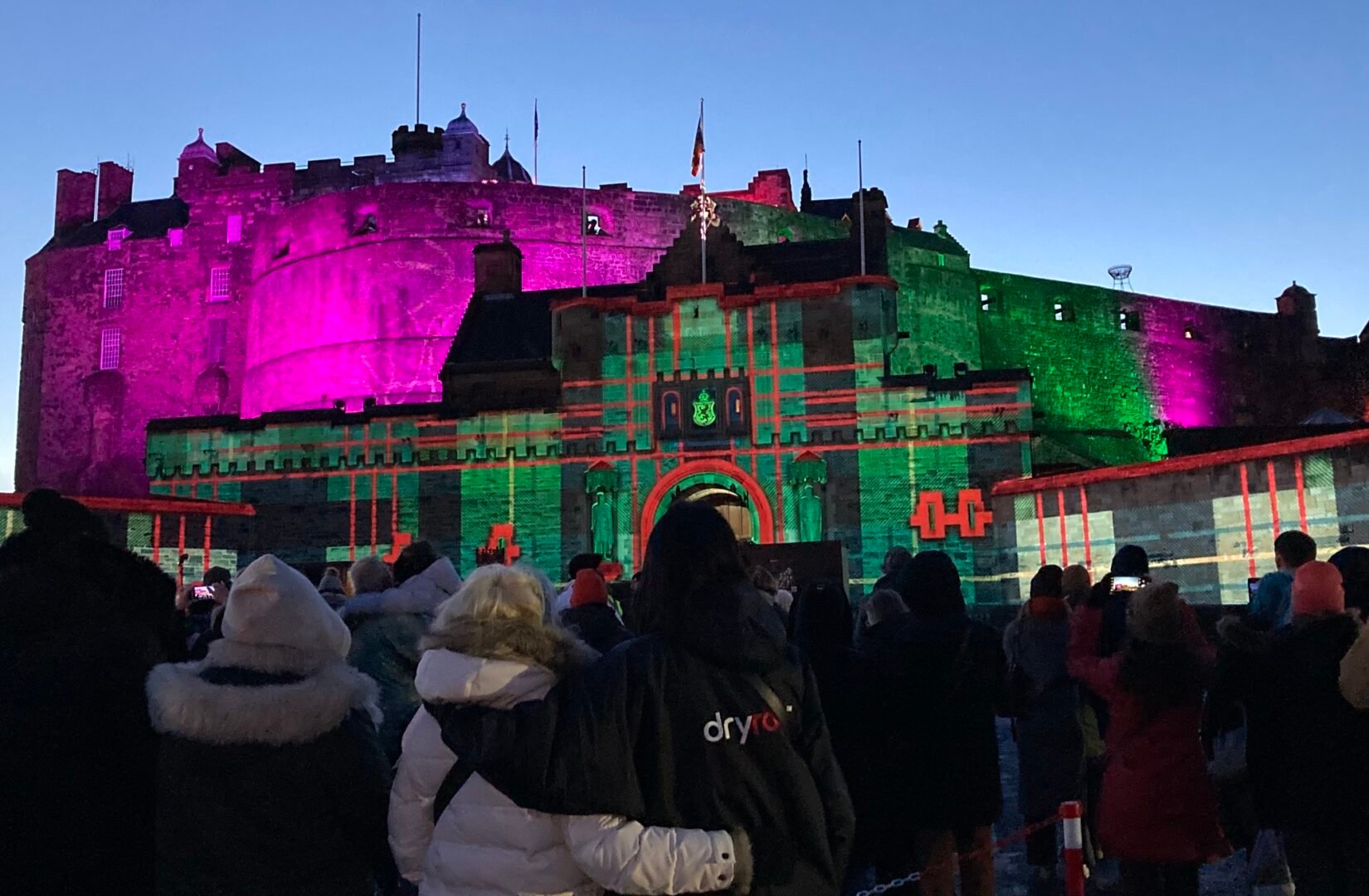
During the festive months, the annual Castle of Light transforms the fortress into an illuminated walking trail filled with projections, colourful displays and seasonal effects. It’s not to be missed.
Combining your castle with other Edinburgh highlights


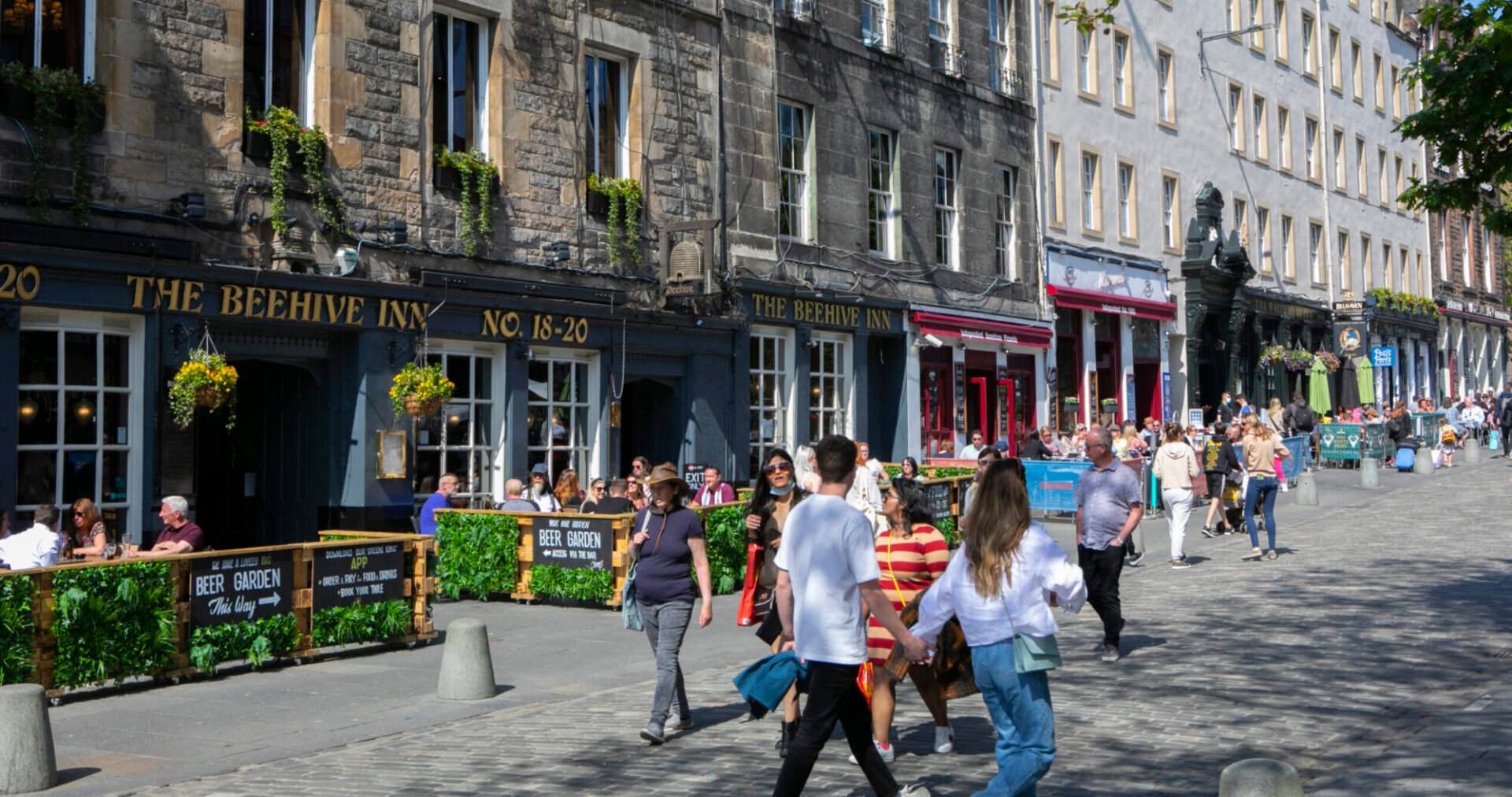

Once you’ve explored the castle, there’s a host of other attractions, shops and places to eat just a short walk away:
- Just steps from the esplanade, Camera Obscura & World of Illusions combines optical illusions, interactive exhibits and rooftop views.
- The Scotch Whisky Experience introduces visitors to whisky production, tasting experiences and one of the world’s largest whisky collections.
- Exploring the Royal Mile allows you to connect the castle with churches, closes, museums, bars, restaurants and historic landmarks with the equally impressive Palace of Holyroodhouse at the bottom of the hill.
- The Grassmarket offers a lively atmosphere filled with pubs, independent shops and outdoor seating beneath dramatic castle views.
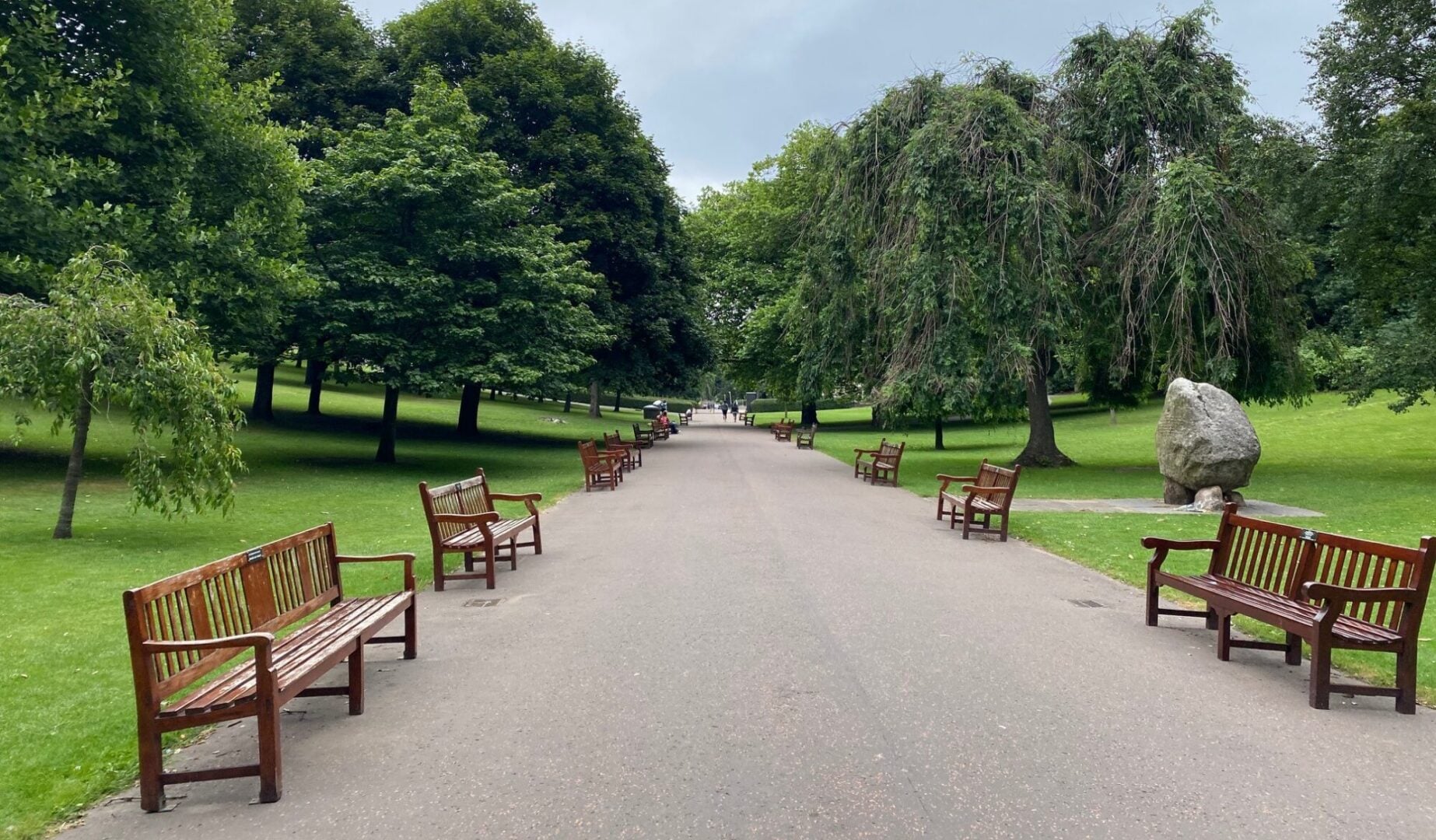
- Prince Street Gardens provides a quiet green place to relax, while admiring the castle views from below.
Frequently asked questions
• Is Edinburgh Castle worth visiting?
Yes – it is widely regarded as one of Scotland’s most popular attractions thanks to its combination of history, architecture, royal artefacts and panoramic city views.
How old is the castle:
Castle Rock has been occupied since at least the Iron Age (around 900 BC). The oldest surviving building is St Margaret’s Chapel, built around 1130 by King David. The castle as we see it today was largely shaped between the 14th and 17th centuries.
Can you easily walk to the castle?
Yes – most visitors approach on foot from the Royal Mile, though the final ascent is steep.
How early should I arrive?
Arriving shortly after opening time is usually best for avoiding large crowds and enjoying quieter exhibition spaces.
Is the One O’Clock Gun fired every day?
The gun is normally fired daily, except Sundays, Good Friday and Christmas Day.
Can you visit Edinburgh Castle in the rain?
Absolutely. Many of the castle’s attractions are indoors, including museums, chapels and exhibition halls, making it a worthwhile visit in typical, changeable Scottish weather!
Are guided tours included in admission?
Led by castle guides, a 30 minute guided tour in English is available only if you book the combined Guided Tour and Admission Ticket.
Are dogs allowed in the castle?
Only assistance dogs are permitted in the castle. Dogs must be kept on a lead and not left unattended at any time.

Share